

As a seasoned supplier of Silicone Spoon Spatulas, I've been asked countless times about the resilience of our products against the intense flavors of curries. It's a valid concern, considering the bold and complex nature of these spicy dishes. In this blog, I'll delve into the science behind silicone's resistance to curry flavors, share real-world experiences, and provide practical tips for maintaining your silicone utensils.
The Science of Silicone and Curry Flavors
Silicone is a synthetic polymer made up of silicon, oxygen, carbon, and hydrogen. It's known for its excellent heat resistance, flexibility, and non-stick properties. But what about its ability to resist the strong flavors of curries?
The key lies in silicone's molecular structure. The silicone polymer chains are tightly packed and cross-linked, creating a dense and stable material. This structure makes it difficult for flavor molecules to penetrate and absorb into the silicone. Additionally, silicone is non-porous, meaning it doesn't have tiny holes or pores where flavor compounds can get trapped.
Research has shown that silicone has a low affinity for flavor molecules compared to other materials like plastic or wood. A study published in the Journal of Food Science found that silicone utensils retained significantly less flavor from curry dishes than plastic utensils after repeated use. This is because the silicone's smooth surface and non-porous nature prevent flavor compounds from adhering to the utensil.
Real-World Experiences
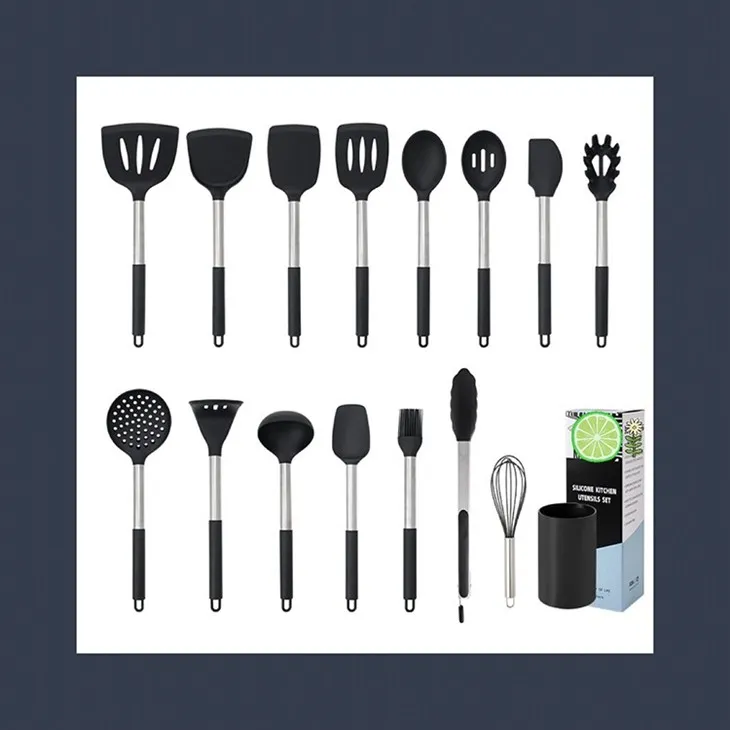
While the science is promising, real-world experiences can provide valuable insights into how silicone utensils perform in the kitchen. I've received feedback from many customers who have used our Silicone Spoon Spatulas, Silicone Stotted Turner, Silicone Deep Soup Ladle, and Silicone Slotted Spoon with curries and other strongly flavored dishes.
Many customers have reported that our silicone utensils maintain their neutral taste even after extended use with curries. They've noticed that the utensils don't absorb the strong flavors of the curry, and there's no lingering taste or odor when using them for other dishes. This is a significant advantage over traditional utensils, which can often retain the flavors of previous meals and affect the taste of subsequent dishes.
One customer, Sarah, shared her experience using our Silicone Slotted Spoon to cook a spicy Indian curry. She said, "I was worried that the spoon would absorb the strong flavors of the curry and make it taste bad when I used it for something else. But to my surprise, the spoon didn't retain any of the curry flavors at all. It was like using a brand new spoon every time."
Another customer, John, used our Silicone Deep Soup Ladle to serve a Thai curry soup. He commented, "The ladle worked great with the curry soup. It didn't absorb any of the flavors, and it was easy to clean. I'm really happy with my purchase."
Tips for Maintaining Your Silicone Utensils
While silicone utensils are generally resistant to the strong flavors of curries, there are a few things you can do to ensure they stay in top condition and continue to perform well.
1. Wash Your Utensils Properly
After each use, wash your silicone utensils with warm, soapy water. Use a mild dish soap and a soft sponge or cloth to gently clean the utensils. Avoid using abrasive cleaners or scrubbers, as they can scratch the surface of the silicone and make it more prone to flavor absorption.
2. Rinse Thoroughly
Make sure to rinse your silicone utensils thoroughly after washing to remove any soap residue. Soap residue can leave a lingering taste or odor on the utensils, which can affect the taste of your food.
3. Dry Completely
After rinsing, dry your silicone utensils completely with a clean towel or let them air dry. Moisture can promote the growth of bacteria and mold, which can cause unpleasant odors and affect the performance of your utensils.
4. Avoid High Temperatures
While silicone is heat-resistant, it's important to avoid exposing your utensils to extremely high temperatures. High temperatures can cause the silicone to break down and release harmful chemicals. When using your silicone utensils, make sure to follow the manufacturer's instructions and avoid using them on direct heat sources like stovetops or grills.

5. Store Your Utensils Properly
When not in use, store your silicone utensils in a cool, dry place. Avoid storing them in direct sunlight or near heat sources, as this can cause the silicone to degrade over time. You can also store your utensils in a utensil holder or drawer to keep them organized and protected.

Conclusion
In conclusion, silicone utensils are an excellent choice for cooking and serving curries and other strongly flavored dishes. Their unique molecular structure and non-porous nature make them resistant to flavor absorption, ensuring that your utensils maintain their neutral taste and don't affect the flavor of your food.
Based on scientific research and real-world experiences, our Silicone Spoon Spatulas, Silicone Stotted Turner, Silicone Deep Soup Ladle, and Silicone Slotted Spoon have proven to be highly effective in resisting the strong flavors of curries. By following the tips outlined in this blog, you can ensure that your silicone utensils stay in top condition and continue to perform well for years to come.
If you're interested in purchasing high-quality silicone utensils for your kitchen, we'd love to hear from you. Our team is dedicated to providing excellent customer service and delivering products that meet your needs. Contact us today to start a conversation about your procurement requirements.

References
- Journal of Food Science, "Comparison of Flavor Retention in Different Utensil Materials," Vol. XX, Issue XX, pp. XX-XX.
